In this video, Ralph Rodriguez takes a detailed look at the Colt Mustang MK IV / Series 80 and the Colt Mustang Pocketlite.
The Colt Mustang is a compact .380 Auto pistol that came from Colt’s MK IV / Series 80 .380 family. It was designed as a small, single-action carry pistol with familiar Colt styling, a frame-mounted thumb safety, and a pocket-sized profile.
Although many people describe the Colt Mustang as a miniature 1911-style pistol, it is not simply a tiny 1911. The Mustang has its own mechanical design and its own place in Colt history. It does not use a grip safety like a full-size 1911, and its internal layout is different from Colt’s larger Government Model pistols.
The standard Colt Mustang offered shooters a small .380 pistol with classic Colt character. The Mustang Pocketlite took the same basic idea and made it lighter by using an alloy frame. That made the Pocketlite easier to carry while still keeping the familiar look and feel that made the Mustang popular.
In this documentary, Ralph covers the background of the Colt Mustang, the MK IV / Series 80 .380 pistol family, the differences between the standard Mustang and the Mustang Pocketlite, and why these small Colts remain interesting to collectors today.
This video is for Colt collectors, firearm history fans, .380 ACP pistol enthusiasts, and anyone interested in classic Colt semi-automatic pistols.
Watch the full video to learn more about the Colt Mustang and the Colt Mustang Pocketlite.

The Smith & Wesson Model 37 Airweight is a classic J-frame revolver chambered in .38 Special. In this video, Ralph walks through an easy beginner-friendly cleaning process for the Model 37 and explains how to keep this lightweight revolver clean, protected, and ready for storage, range use, or carry.
This revolver cleaning tutorial is designed for viewers who may be new to Smith & Wesson revolvers or anyone who wants a simple, practical way to maintain a classic snub-nose revolver. Ralph covers the key areas that need attention, including the barrel, cylinder chambers, forcing cone, extractor star, ejector rod area, and exterior surfaces.
The Model 37 is an Airweight version of the classic Smith & Wesson J-frame design. Because many of these revolvers are older firearms, careful cleaning and maintenance helps preserve both function and condition. This video keeps the process straightforward without making revolver cleaning more complicated than it needs to be.
Whether you own a Smith & Wesson Model 37, Model 36 Chiefs Special, or another J-frame .38 Special revolver, this tutorial will help you understand the basic cleaning steps and the areas you should inspect during maintenance.
This video is especially helpful for beginners, new revolver owners, or anyone who inherited or purchased a classic Smith & Wesson and wants to learn how to take care of it properly.
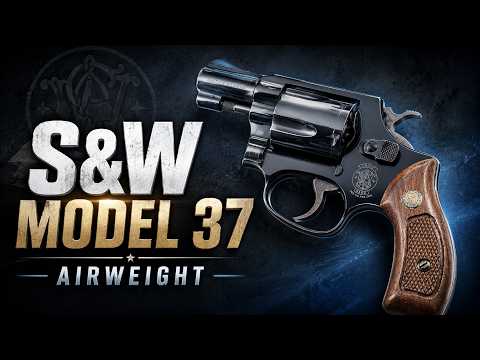
The Smith & Wesson Model 37 Airweight is one of the classic lightweight J-frame revolvers from Smith & Wesson. At first glance, it looks like a simple five-shot snub-nose .38 Special revolver, but the Model 37 played an important role in the development of lightweight everyday carry firearms.
In this video, Ralph takes a closer look at the history of the Smith & Wesson Model 37, its connection to the original Chiefs Special, and why the Airweight design was such an important step forward. Long before polymer-framed pistols became common, Smith & Wesson was already trying to solve one of the biggest problems in concealed carry: how to make a defensive handgun light enough that people would actually carry it every day.
The Model 37 used the proven J-frame platform and paired it with an aluminum alloy frame to reduce weight. It retained the basic strengths of the Chiefs Special design, including a five-shot cylinder, fixed sights, exposed hammer, and .38 Special chambering, but made the revolver easier to carry for long periods of time.
This video discusses the role these revolvers played with police officers, off-duty officers, detectives, and armed citizens who wanted a compact and reliable defensive handgun. Ralph also covers the practical tradeoff of the Airweight design: the lighter frame makes the gun easier to carry, but also makes recoil more noticeable when shooting.
The revolver shown in this video is a Smith & Wesson Model 37 Airweight with the classic snub-nose barrel commonly referred to as a 2-inch barrel, though the actual J-frame snub barrel length is often closer to 1 7/8 inches. It features a blued finish, steel cylinder, exposed hammer, round butt grip frame, and traditional wood stocks.
By the time this particular Model 37 was produced, the revolver era was nearing its final major chapter before semi-automatic pistols became dominant in American law enforcement and concealed carry. That makes the Model 37 an interesting bridge between the older steel revolver tradition and the lightweight carry guns that would become common later.
This documentary explains why the Smith & Wesson Model 37 Airweight remains respected by collectors, shooters, and fans of classic concealed-carry revolvers. It may be small and simple, but its influence is much larger than its size suggests.

The Colt King Cobra is one of the most recognizable revolvers ever produced by Colt, yet it often lives in the shadow of the legendary Python. In this documentary, Ralph Rodriguez takes a detailed look at the original Colt King Cobra .357 Magnum revolver and explores how it earned its place among Colt's famous Snake Guns.
The revolver featured in this video is an original early-1990s Colt King Cobra with a 6-inch barrel. Unlike the modern reintroduced King Cobra, this revolver comes from Colt's original production era and represents one of the company's final generations of classic double-action revolvers.
The documentary covers the history of the King Cobra from its introduction in 1986 through the end of original production in 1998. Ralph examines the revolver's relationship to the Trooper Mark V, explains how it differed from the Colt Python, and discusses the changing handgun market that shaped its development. During the 1980s and 1990s, American law enforcement agencies were rapidly transitioning from revolvers to high-capacity semi-automatic pistols. The King Cobra arrived during this period and became one of Colt's last major efforts to compete in the full-size .357 Magnum revolver market.
Viewers will learn about the King Cobra's design features, including its full-length underlug barrel, adjustable sights, six-shot cylinder, and Mark V-based action system. The documentary also explores why the King Cobra was engineered differently than the Python and how Colt sought to create a durable and practical magnum revolver while still maintaining the appearance and prestige associated with the Snake Gun family.
The video also examines collector interest in the original King Cobra. For many years, the revolver was overshadowed by the Python, but collector attitudes have changed considerably. Today, original King Cobras are increasingly appreciated for their historical significance, limited production numbers, and connection to Colt's final years of traditional double-action revolver manufacturing.
From its introduction during the decline of the police revolver era to its status as a highly sought-after collector firearm, the Colt King Cobra tells an important chapter in Colt's history. This documentary explores that story and explains why the original King Cobra remains one of the most respected Colt revolvers ever produced.
Whether you are a longtime Colt collector, a revolver enthusiast, or simply interested in firearms history, this documentary provides an in-depth look at one of Colt's most distinctive magnum revolvers.

In this video, Ralph shows how to clean and maintain the Colt King Cobra revolver.
This cleaning guide is made for beginners, collectors, and anyone who wants to keep their Colt King Cobra in proper working condition. Whether the revolver is used at the range, kept for home defense, carried, or stored as part of a collection, regular cleaning helps preserve the firearm and keeps everything operating smoothly.
Ralph walks through the cleaning process step by step, including the barrel, cylinder, chambers, forcing cone area, ejector star, and exterior surfaces. The video focuses on a simple and careful cleaning method without making the process more complicated than it needs to be.
The Colt King Cobra is a .357 Magnum revolver, which means carbon and fouling can build up around the chambers, cylinder face, barrel, and forcing cone after shooting. In this video, Ralph shows how to remove that buildup, wipe down the revolver properly, and make sure no excess oil or cleaner is left behind.
This video is especially useful for anyone who recently bought a Colt King Cobra, inherited one, or wants a straightforward refresher on revolver maintenance. Ralph explains the process in a clear way so the viewer can follow along and understand what each area of the revolver needs.
By the end of the cleaning, the Colt King Cobra is wiped down, inspected, and ready to go back into storage, a range bag, or a holster. The goal is simple: keep the revolver clean, smooth, protected, and ready for the next time it is needed.

Ralph takes a deep dive into the history of the original Colt Trooper, one of the most respected double-action revolvers ever produced by Colt. While the Python often receives most of the attention from collectors, the Trooper built its own reputation as a dependable and accurate .357 Magnum revolver during the golden age of American law enforcement.
Introduced in 1953, the Colt Trooper was designed to provide shooters with many of the features found on Colt’s premium revolvers while remaining practical enough for daily duty use. It quickly found favor among police officers, highway patrolmen, outdoorsmen, and serious revolver enthusiasts who appreciated Colt’s craftsmanship and smooth double-action trigger system.
In this documentary, Ralph explores the origins of the Trooper and the role it played in Colt’s lineup during the 1950s and 1960s. The video examines the classic Colt action, the revolver’s relationship to the legendary Colt Python, and the engineering philosophy that made these hand-fitted revolvers unique. Viewers will also learn how the Trooper fit into the rapidly growing popularity of the .357 Magnum cartridge and why so many law enforcement professionals trusted revolvers like this during the peak of the revolver era.
The documentary also looks at how the Trooper earned a reputation for accuracy and reliability, why collectors have become increasingly interested in original Troopers, and how these revolvers represent the final years of Colt’s traditional revolver craftsmanship before major design changes arrived with the Mk III series.
Whether you are a longtime Colt collector, a revolver enthusiast, or simply interested in the history of American firearms, the Colt Trooper offers a fascinating look into a period when finely crafted double-action revolvers dominated the market. Decades after its introduction, the Trooper remains one of Colt’s most respected and historically significant revolvers, continuing to attract shooters and collectors who appreciate classic American gunmaking.

The Colt Lawman Mk III is one of the most underrated revolvers ever produced by Colt. While revolvers such as the Python, Diamondback, and Detective Special often receive most of the attention from collectors and enthusiasts, the Lawman was designed with a different purpose in mind. It was built to be a practical, hard-working .357 Magnum revolver for police officers and armed professionals during a time when American law enforcement was still dominated by the revolver.
In this video, Ralph Rodriguez takes a deep dive into the history of the Colt Lawman Mk III and explores how it fit into Colt's evolving revolver lineup. The documentary covers the introduction of the Mk III series in 1969, Colt's efforts to modernize revolver production, and the company's response to increasing competition in the law enforcement market.
Viewers will learn about the Lawman's development, its relationship to the Trooper Mk III, and the mechanical changes that distinguished the Mk III revolvers from Colt's earlier double-action designs. The video also examines the Lawman's role as a fixed-sight duty revolver, the available barrel lengths and finishes, and why the revolver appealed to officers who needed a dependable sidearm chambered in .357 Magnum.
The documentary also places the Lawman within the broader context of American firearms history. During the 1970s and early 1980s, revolvers were still the standard sidearm for most police agencies, but the rise of semi-automatic pistols was already beginning to reshape the market. The Lawman existed during this transitional period and serves as an important example of Colt's attempt to adapt to changing demands while maintaining its reputation for quality firearms.
Whether you are a Colt collector, revolver enthusiast, law enforcement historian, or simply interested in classic American firearms, the Colt Lawman Mk III represents an important chapter in Colt's history. Its practical design, unique place within the Mk III family, and connection to the final decades of widespread police revolver use make it a fascinating firearm to study today.
Watch the full documentary to learn why the Colt Lawman Mk III deserves far more recognition than it often receives and why it remains one of Colt's most interesting service revolvers.

In this video, Ralph walks viewers through the process of properly cleaning and maintaining the Colt Trooper revolver step-by-step. This guide was designed to be beginner-friendly while still covering the details that serious Colt enthusiasts appreciate. From safe disassembly and proper cleaning techniques to lubrication and final inspection, this video focuses on preserving the reliability and condition of one of Colt’s classic double-action revolvers.
The Colt Trooper remains an iconic American revolver with a reputation for smooth action, accuracy, and durability. Proper maintenance is important not only for reliability, but also for protecting the finish and long-term value of these revolvers. Whether your Colt Trooper is a range gun, carry revolver, or collector piece, this video will help you properly care for it without causing unnecessary wear or damage.
Cleaning equipment used in this video can be found through the links on this website.

Ralph walks viewers through the complete process of cleaning and maintaining the Colt Lawman revolver. This guide was designed with beginners in mind, especially those who may have recently inherited a Colt Lawman or purchased one for the first time and want to properly care for a classic Colt revolver without damaging it.
In this video, Ralph covers safe cleaning techniques, proper maintenance practices, and important tips to help preserve the revolver’s condition and reliability for years to come. Whether the firearm is being prepared for carry, storage, collection purposes, or regular range use, this step-by-step guide keeps the process simple and easy to follow.
Recommended cleaning equipment used in this video can be found through the links on this website.

The Colt Agent is one of the most underrated revolvers ever produced by Colt. Built on Colt’s lightweight D-frame platform, the Agent was designed as a compact six-shot revolver for deep concealment during the golden era of American revolvers.
In this documentary-style video, Ralph takes a detailed look at the history and evolution of the Colt Agent revolver, including its relationship to the Colt Detective Special and Colt Cobra, the development of Colt’s alloy-frame carry revolvers, the differences between early and later production models, and why the Agent still remains highly respected among Colt enthusiasts and collectors today.
This video explores the design philosophy behind the Colt Agent, its role as a lightweight concealed carry revolver, and how it became an important part of Colt’s historic D-frame lineup.
If you enjoy classic firearms history, vintage revolvers, Colt collecting, and documentary-style firearm content, be sure to check out the full video on the Skull Crush Inc. YouTube channel.


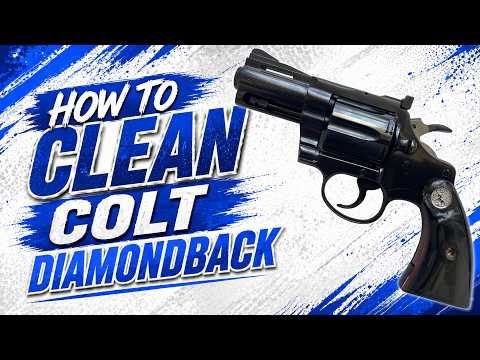
The Colt Diamondback is one of the most recognizable revolvers Colt ever produced. Introduced in 1966, the Diamondback combined premium styling, adjustable sights, and classic Colt craftsmanship into a compact package that would eventually become one of the most sought-after revolvers in the Colt lineup.
In this documentary, Ralph takes a deep dive into the history of the Colt Diamondback, exploring its origins, development, features, production history, and enduring appeal among collectors. While many shooters immediately notice the Diamondback’s resemblance to the Colt Python, this video explains why the Diamondback deserves recognition as its own revolver rather than simply being compared to its larger stablemate.
The documentary covers the Diamondback’s D-frame design, available chamberings in .38 Special and .22 Long Rifle, barrel length options, finish variations, and the details that collectors look for when evaluating these revolvers today. Ralph also discusses how the Diamondback fit into Colt’s product line during the 1960s and 1970s and why it remains highly desirable decades after production ended.
Special attention is given to collector-related topics including grips, sights, originality, factory configurations, and common misconceptions that often surround the Diamondback. For viewers interested in purchasing, collecting, or simply learning more about one of Colt’s classic revolvers, this documentary provides a detailed overview of what makes the Diamondback unique.
Whether you're a longtime Colt enthusiast, a firearms historian, or someone discovering the Diamondback for the first time, this video offers an in-depth look at a revolver that continues to command respect among collectors and shooters alike.
Topics covered include:
• History of the Colt Diamondback
• Colt D-frame revolvers
• Diamondback production history
• .38 Special and .22 Long Rifle models
• Barrel lengths and finish options
• Collector features and identification points
• Diamondback grips and sights
• Colt craftsmanship and design features
• Modern collector values and desirability
• The Diamondback's place in Colt revolver history
The Colt Diamondback remains one of the finest examples of Colt's classic double-action revolver era and continues to be admired for its appearance, handling characteristics, and collector appeal. In this video, Ralph examines what helped make the Diamondback one of the most respected revolvers ever to bear the Colt name.